On view at Susan Sheehan Gallery until September 10, 2026
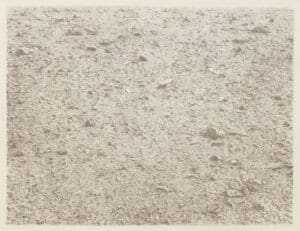 Vija CelminsUntitled (Large Desert)
 Edward HopperEvening Wind
- Edward HopperThe Locomotive
- Jasper JohnsSavarin
- Jasper JohnsAle Cans
- Jasper JohnsTwo Flags
- William Henry JohnsonBlind Singer
- William Henry JohnsonJitterbugs III
- William Henry JohnsonJitterbugs II
- Edward RuschaMade in California
- Edward RuschaCity
- Andy WarholCampbell’s Soup I: Black Bean Soup
- Andy WarholMarilyn Monroe (Marilyn)
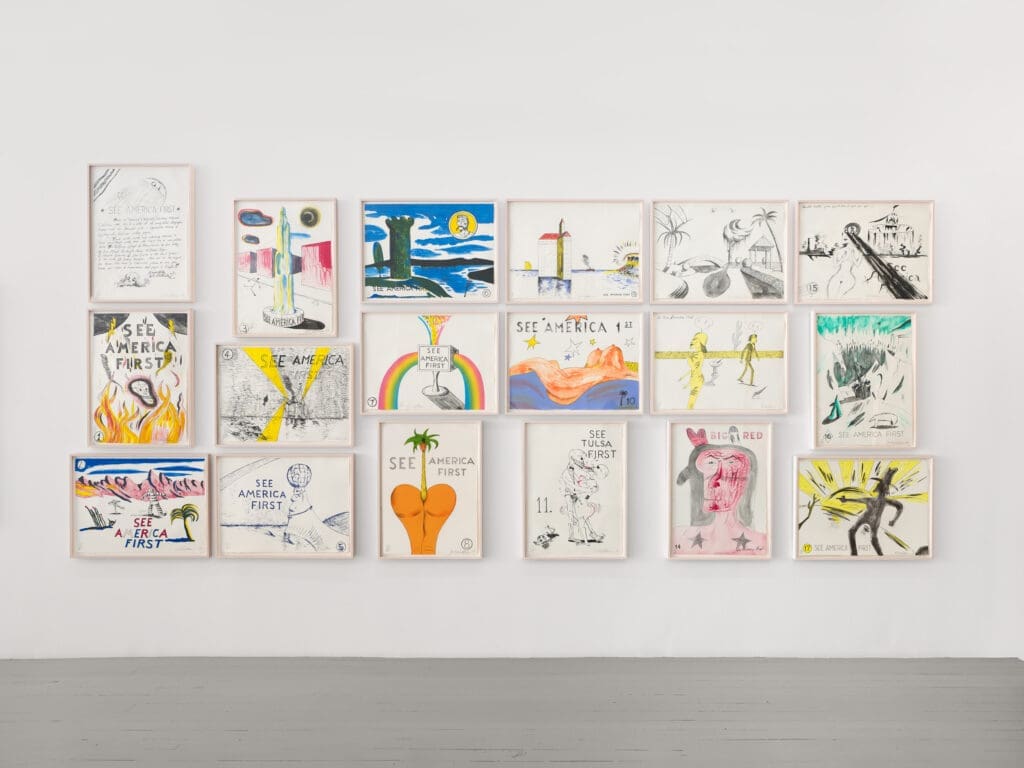
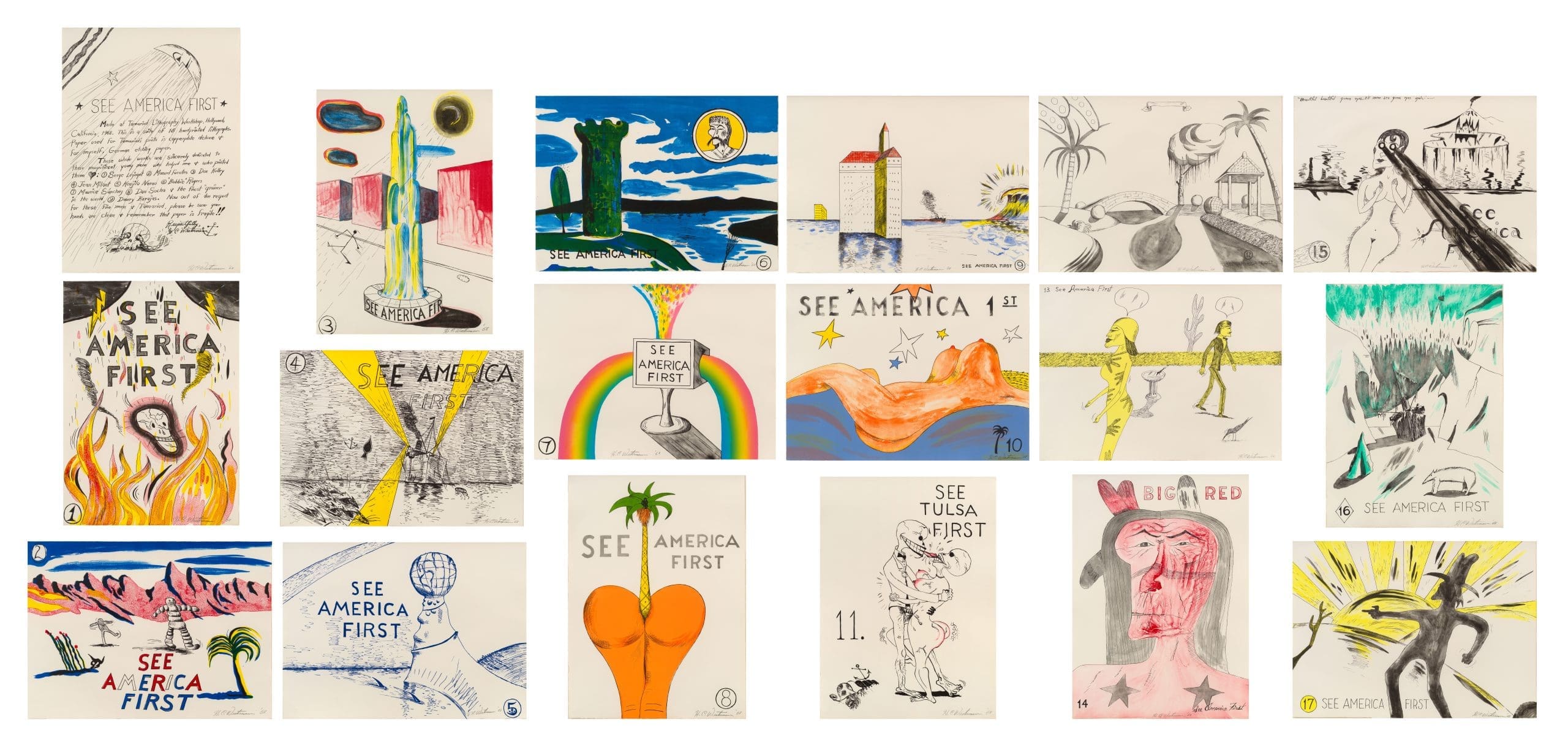
- H.C. WestermannSee America First


About this exhibition
In celebration of the American Semiquincentennial, Susan Sheehan Gallery is pleased to present Living in America: The Printed Image. While artists have long used printmaking to examine the nation’s cultural ethos, twentieth-century artists embraced Americana—the artifacts and cultural touchstones that characterize United States history and culture—to refine their interpretations. The exhibition features master prints by Vija Celmins, Edward Hopper, William Henry Johnson, Jasper Johns, Ed Ruscha, Andy Warhol, and H.C. Westermann.
H.C. Westermann’s See America First is a fantastical, humorous, and sometimes unpleasant exploration of the artist’s complicated views of his country. As a World War II and Korean War veteran, Westermann held an anti-military stance. After his service, he embarked on a cross-country road trip and found inspiration in the National Park Service’s slogan: “See America First.” The result was a set of eighteen lithographs completed in 1968 at Tamarind Lithography Workshop in Los Angeles. This ambitious portfolio illustrates Westermann’s journey through shocking figures and surreal landscapes, encapsulating his satirical perspective on Americana.
After living in Europe for thirteen years, William Henry Johnson returned to the United States in 1938 to “paint his own people.” While working as an instructor at the Harlem Community Art Center (HCAC), Johnson began experimenting with the bright, opaque inks of industrial screenprinting. He used these materials to document the Harlem Renaissance, employing cubist shapes and a folk art influence to recreate iconic dance moves and street scenes. These exceedingly rare screenprints, including Jitterbugs II and Jitterbugs III, offer a firsthand account of a pivotal moment in American history.
Andy Warhol opened his own in-house publishing operation, Factory Additions, in 1966, and many of his first major print portfolios embraced the motifs of Americana. For Marilyn Monroe (Marilyn), Warhol chose to print the face of America’s deceased sweetheart in ten different colors using the same five screens. Later, he printed Campbell’s Soup I: Black Bean Soup as part of a larger portfolio where the only variation between cans of the classic American meal was a single screen with the label. Both prints in the exhibition reflect Warhol’s fascination with seriality, emphasizing his point that “the idea of America is so wonderful because the more equal something is, the more American it is.”
Living in America: The Printed Image is on view at Susan Sheehan Gallery until September 10, 2026.